Gluten Free Buckwheat Bread Recipe (Healthy, Easy & Naturally Gluten-Free)
Finding a healthy gluten free bread recipe that actually works can feel impossible. Most gluten-free loaves turn out dense, crumbly, or taste like cardboard. But buckwheat bread changes everything.
This gluten free buckwheat bread recipe delivers a soft, flavorful loaf that rivals traditional wheat bread. Even better, buckwheat is naturally gluten-free and packed with nutrients.
Whether you have celiac disease or simply want healthier bread options, this easy buckwheat bread will become your new favorite. Let me show you exactly how to make it.
Is Buckwheat Gluten Free?

Yes, buckwheat is naturally gluten-free despite its misleading name. The word “wheat” in buckwheat confuses many people, but buckwheat is not related to wheat at all.
Buckwheat is actually a seed from a plant related to rhubarb. It contains no gluten proteins whatsoever. This makes buckwheat flour a perfect choice for people with celiac disease or gluten sensitivity.
Understanding Buckwheat as a Gluten-Free Grain Alternative
Buckwheat belongs to a category called pseudocereals. These plants produce seeds that we use like grains, but they are not true cereal grains.
The buckwheat plant grows quickly and produces triangle-shaped seeds. When ground, these seeds create the flour we use for baking. Buckwheat naturally contains no gluten, making it safe for gluten-free diets.
Many people find buckwheat easier to digest than wheat. The fiber in buckwheat supports healthy digestion without the inflammatory effects some people experience with gluten.
Cross-Contamination Risks You Should Know
While buckwheat is naturally gluten-free, cross-contamination during processing is a real concern. Many facilities process both buckwheat and wheat products using the same equipment.
Wheat particles can transfer to buckwheat flour during grinding, packaging, or storage. For people with celiac disease, even tiny amounts of gluten can trigger serious health issues.
This is why choosing certified gluten-free buckwheat flour matters so much. Certification means the product was tested and contains less than 20 parts per million of gluten.
Why Certified Gluten-Free Buckwheat Flour Matters
Always look for buckwheat flour labeled as certified gluten-free. This certification requires third-party testing to verify gluten levels stay below safe thresholds.
Reputable brands dedicate facilities exclusively to gluten-free products. This prevents any possibility of cross-contamination during manufacturing.
When you use certified buckwheat flour, you can bake with confidence. Your bread will be truly gluten-free and safe for even the most sensitive individuals.
Important Note: Buckwheat naturally contains no gluten, but always verify your buckwheat flour is certified gluten-free to avoid cross-contamination risks. This is especially critical for people with celiac disease.
Ingredients for Gluten Free Buckwheat Bread Recipe

This buckwheat bread recipe uses simple, wholesome ingredients you can find at most grocery stores. The measurements create one standard loaf of bread.
Main Ingredients
- 2 cups (240g) light buckwheat flour – the foundation of this recipe
- 1 tablespoon psyllium husk powder – creates structure and binds the dough
- 1 tablespoon instant yeast – helps the bread rise beautifully
- 1 teaspoon salt – enhances flavor and controls yeast activity
- 1 tablespoon honey or maple syrup – feeds the yeast and adds subtle sweetness
- 1 and 1/4 cups (300ml) warm water – activates yeast and creates proper texture
- 2 tablespoons olive oil – adds moisture and improves crumb texture
- 1 teaspoon apple cider vinegar – helps bread rise and improves texture
Ingredient Notes and Substitutions
Light buckwheat flour works best for this bread recipe. Dark buckwheat flour has a stronger, more bitter taste that can overpower the bread. If you only have dark buckwheat, reduce the amount by one-fourth and add another gluten-free flour.
Psyllium husk powder is critical for texture. This ingredient acts like gluten, binding ingredients together and creating a soft crumb. Do not skip it or substitute with anything else.
The warm water should feel comfortable to touch, around 105-110°F (40-43°C). Water that is too hot will kill the yeast. Water that is too cold will not activate it properly.
You can use any neutral oil instead of olive oil. Avocado oil or melted coconut oil work well. The oil keeps the bread moist and prevents it from becoming too dense.
Pro Tip: Measure buckwheat flour by weight if possible. A cup of flour can vary by 20-30 grams depending on how you scoop it. Weight measurements ensure consistent results every time you bake this bread.
Best Buckwheat Flour for This Recipe
Using high-quality buckwheat flour makes a noticeable difference in your final bread. I recommend choosing certified gluten-free options to ensure safety and the best texture.
Here are my top picks for buckwheat flour that work perfectly in this gluten free buckwheat bread recipe:

Bob's Red Mill Organic Buckwheat Flour
This is my go-to buckwheat flour for all gluten-free baking. Bob’s Red Mill produces consistently high-quality flour with a fine texture that creates soft, tender bread.
- Certified gluten-free and tested for purity
- 100% whole grain buckwheat, stone-ground for best nutrition
- Organic and non-GMO verified
- Light color and mild flavor perfect for bread
- Dedicated gluten-free facility prevents cross-contamination

Arrowhead Mills Organic Buckwheat Flour
Another excellent option with a slightly lighter texture than Bob’s Red Mill. This flour produces bread with a delicate crumb and subtle nutty flavor.
- Certified organic and gluten-free
- Finely milled for smooth batter consistency
- Light buckwheat flour ideal for bread recipes
- No artificial ingredients or preservatives
- Affordable price point for regular baking

Anthony's Organic Buckwheat Flour
This brand offers exceptional value without compromising quality. The flour has a fine, consistent grind that works beautifully in buckwheat bread recipes.
- Batch-tested and certified gluten-free
- 100% pure organic buckwheat, nothing added
- Resealable bag keeps flour fresh longer
- Large quantity option for frequent bakers
- Verified non-GMO and vegan-friendly
Any of these buckwheat flour options will give you excellent results. I have tested this recipe with all three brands, and each produces delicious, properly textured bread.
Step-by-Step Instructions for Buckwheat Bread

Making this gluten free buckwheat bread is surprisingly simple. The process takes about two hours total, but most of that time is hands-off rising and baking. Let me walk you through each step.
Step 1: Activate the Yeast
Pour the warm water into a large bowl. The water temperature should feel slightly warm to your touch, around 105-110°F (40-43°C).
Add the honey or maple syrup to the water and stir until dissolved. Sprinkle the instant yeast over the liquid and let it sit for five minutes.
You will see the yeast become foamy and bubbly. This means your yeast is active and ready to work. If nothing happens after ten minutes, your water was too hot or your yeast is expired.
Step 2: Mix the Dry Ingredients
In a separate bowl, whisk together the buckwheat flour, psyllium husk powder, and salt. Make sure these ingredients are evenly distributed before adding liquid.
Psyllium husk powder can clump if added directly to liquid. Mixing it with flour first prevents lumps in your bread dough.
Step 3: Combine Wet and Dry Ingredients
Pour the flour mixture into the bowl with activated yeast. Add the olive oil and apple cider vinegar.
Stir everything together with a wooden spoon or spatula. The batter will be thick but pourable, similar to thick pancake batter. This is normal for gluten-free bread dough.
Mix for about one minute until you see no dry flour pockets. The dough will look a bit gummy because of the psyllium husk powder. Do not worry, this creates the perfect texture.
Recommended Mixing Tools
While you can mix this dough by hand, a hand mixer makes the process easier and ensures thorough mixing. Here is the tool I recommend for this buckwheat bread recipe:

KitchenAid 5-Speed Hand Mixer
This hand mixer makes combining buckwheat bread ingredients effortless. The five speed settings give you complete control, and the powerful motor handles thick gluten-free batters easily.
- Five speed options for precise mixing control
- Soft-grip handle reduces hand fatigue during mixing
- Includes beaters and dough hooks for versatility
- Easy-eject button releases attachments with one press
- Dishwasher-safe attachments for quick cleanup
- Powerful motor handles thick buckwheat bread batter
I use this mixer for all my gluten-free bread recipes. It creates smoother batter and better texture than hand mixing, especially important for achieving the right consistency in buckwheat bread.
Step 4: First Rise
Cover the bowl with a clean kitchen towel or plastic wrap. Place it in a warm spot away from drafts.
Let the dough rise for one hour. The batter should increase in volume by about fifty percent. You will see bubbles forming on the surface, which shows the yeast is working.
If your kitchen is cold, place the bowl near a warm oven or in a turned-off oven with the light on. Warmth helps the yeast work faster and creates better rise.
Step 5: Prepare the Loaf Pan
While the dough rises, prepare your loaf pan. Grease a standard 9×5 inch loaf pan thoroughly with oil or cooking spray.
You can also line the pan with parchment paper for easier removal. Leave some overhang on the sides so you can lift the bread out after baking.
Step 6: Shape and Second Rise
After the first rise, stir the dough gently to release some air bubbles. Pour the batter into your prepared loaf pan.
Use a wet spatula to smooth the top of the dough. Buckwheat bread dough is sticky, so keeping your tools damp prevents sticking.
Cover the pan with the towel again and let it rise for another thirty to forty-five minutes. The dough should reach just above the rim of the pan.
Step 7: Bake the Bread
Preheat your oven to 375°F (190°C) about fifteen minutes before the second rise finishes.
Place the loaf pan in the center of the oven. Bake for fifty to sixty minutes. The bread is done when the top is golden brown and a toothpick inserted in the center comes out clean.
The internal temperature should reach 205°F (96°C) if you use a thermometer. This ensures the center is fully baked.
Step 8: Cool Completely Before Slicing
Remove the loaf pan from the oven and let it sit for ten minutes. Then carefully remove the bread from the pan and place it on a wire cooling rack.
Let the bread cool completely before slicing. This step is critical. Cutting warm gluten-free bread causes it to become gummy and fall apart.
The bread needs at least one hour to cool completely. I know waiting is hard, but cool completely slicing ensures perfect texture and clean slices.
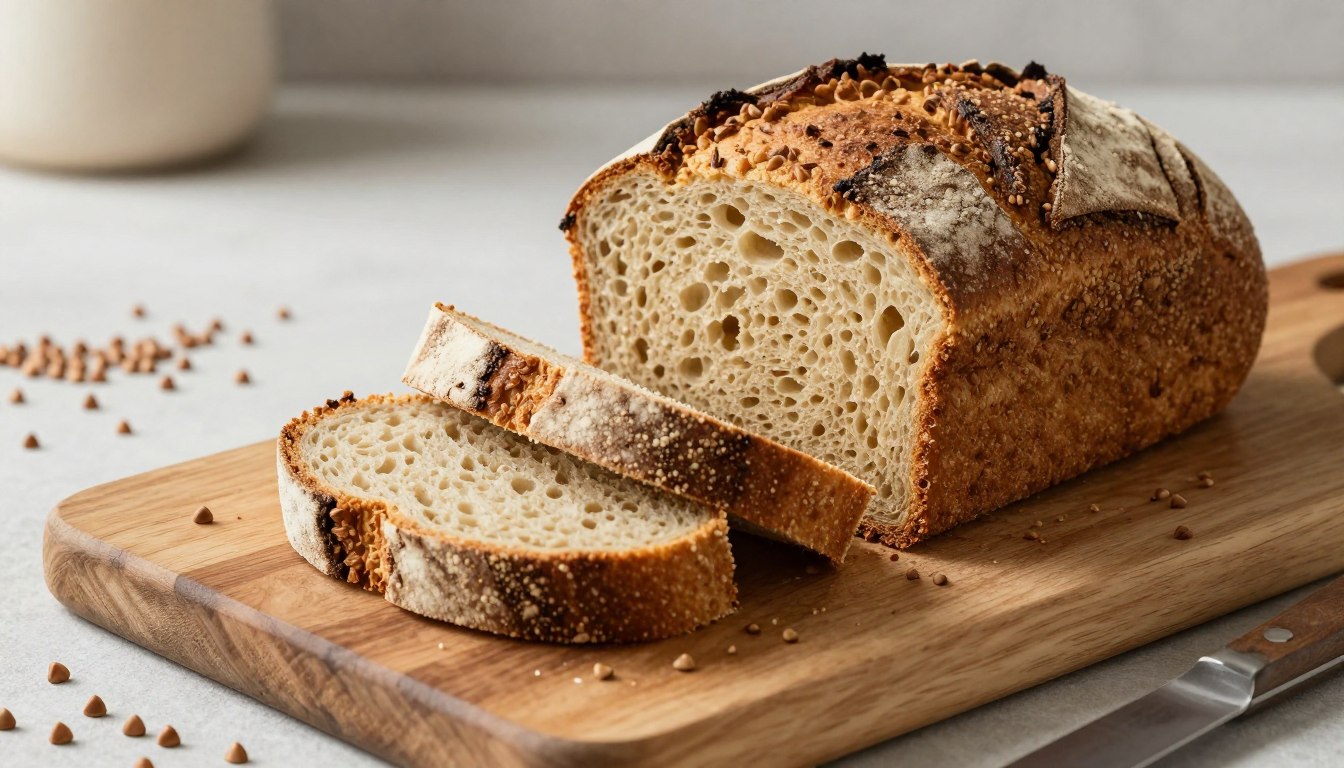
Once cool, slice the buckwheat bread with a sharp serrated knife. Store any leftover slices properly to maintain freshness.
Tips for Perfect Buckwheat Bread

These tips will help you bake the best buckwheat bread every single time. Small details make a big difference in gluten-free baking.
Getting the Right Texture
Buckwheat bread should have a tender, slightly dense crumb. It will not be as light and fluffy as wheat bread, and that is perfectly normal.
The texture should feel moist but not gummy. If your bread turns out too dense, you may have used too much flour or not enough liquid.
Let the batter rest during rising times. This allows psyllium husk powder to fully absorb the liquid and create better structure.
Moisture Balance Is Critical
Gluten-free bread dries out faster than wheat bread. The moisture level in your batter directly affects the final texture.
Your batter should look thick but still be pourable. If it seems too thick, add one to two tablespoons more water. If it seems too thin, add a bit more buckwheat flour.
Humidity in your kitchen affects how much liquid the flour absorbs. On humid days, you may need slightly less water. On dry days, you might need a bit more.
Oven Temperature Matters
Every oven bakes slightly differently. If your bread browns too quickly on top but stays raw inside, reduce temperature by twenty-five degrees.
You can tent the loaf with aluminum foil during the last fifteen minutes of baking. This prevents over-browning while the center finishes cooking.
Use an oven thermometer to verify your oven temperature is accurate. Many ovens run hot or cold, which affects baking time.
Rising Environment
Yeast needs warmth to work properly. The ideal rising temperature is around 75-80°F (24-27°C).
If your kitchen is cold, create a warm environment by turning your oven to the lowest setting for two minutes, then turning it off. Place the covered bowl inside the warm (but turned off) oven.
Avoid letting dough rise in temperatures above 90°F (32°C). Too much heat kills yeast and prevents proper rising.
Do Not Skip the Cooling Time
I cannot stress this enough: let your bread cool completely before slicing. Warm gluten-free bread has a gummy texture that firms up only after cooling.
Plan to bake your bread at least two hours before you need it. This gives enough time for baking and cooling.
The bread continues to set as it cools. What feels soft and gummy when warm becomes perfectly sliceable after cooling on a wire rack.
Common Mistakes to Avoid
Even experienced bakers make mistakes with gluten-free bread. Learn from these common errors so your buckwheat bread turns out perfect.
Using the Wrong Type of Buckwheat Flour
Dark buckwheat flour has a much stronger, more bitter taste than light buckwheat flour. Using 100 buckwheat flour in the dark variety can make your bread taste unpleasant.
Always choose light buckwheat flour for bread recipes. Save dark buckwheat for pancakes or waffles where the stronger flavor works better.
Make sure your buckwheat flour is fresh. Old flour can taste stale or rancid, which ruins your bread. Store buckwheat flour in an airtight container in the refrigerator or freezer for best freshness.
Incorrect Liquid Ratio
Adding too much or too little liquid is the most common reason buckwheat bread fails. The batter should be thick but pourable.
If your batter is stiff like traditional wheat dough, add more water one tablespoon at a time. Gluten-free bread batters are much wetter than wheat bread doughs.
If the batter is too thin and runny, add more buckwheat flour gradually. Too much liquid creates a gummy, dense loaf that never sets properly.
Skipping the Psyllium Husk Powder
Some people try to make this recipe without psyllium husk powder. This never works well. Psyllium creates the structure that gluten normally provides.
Without psyllium husk powder, your bread will not hold together. It will crumble and fall apart when sliced.
Do not substitute psyllium with flax or chia seeds. These ingredients do not provide the same binding properties in bread.
Not Letting Bread Cool Completely
I mentioned this before, but it deserves repeating. Cutting into warm gluten-free bread ruins the texture.
The starches in buckwheat bread need time to set as the loaf cools. This process takes at least one hour after removing the bread from the oven.
Be patient. Let the bread cool completely before slicing. Your patience will be rewarded with perfect slices instead of gummy, torn pieces.
Using the Wrong Pan Size
This recipe is designed for a standard 9×5 inch loaf pan. Using a different size changes baking time and how the bread rises.
A smaller pan creates a taller loaf that may not bake through in the center. A larger pan creates a flat, wide loaf that may dry out.
Stick with the recommended pan size for best results. The right pan ensures even baking and proper texture.
Choose the Right Loaf Pan
The pan you use significantly affects how your buckwheat bread bakes. A quality loaf pan prevents sticking and ensures even heat distribution.
Here is the loaf pan I recommend for this gluten free buckwheat bread recipe:

USA Pan Nonstick Aluminized Steel Loaf Pan
This is hands-down the best loaf pan for gluten-free baking. The unique corrugated surface creates better air circulation, which prevents soggy bottoms and ensures even browning on all sides.
- Standard 9×5 inch size perfect for this recipe
- Aluminized steel construction distributes heat evenly
- Nonstick coating releases bread easily every time
- Corrugated surface promotes air circulation for better baking
- Commercial-grade quality lasts for years
- Made in USA with food-safe materials
- Dishwasher safe for easy cleanup
I have used this pan for hundreds of loaves. The bread releases perfectly without sticking, and the even heat distribution prevents the common problem of raw centers in gluten-free bread. Worth every penny.
Over-Mixing the Batter
Unlike wheat bread that benefits from kneading, buckwheat bread batter should not be over-mixed. Mix just until ingredients combine completely.
Over-mixing incorporates too much air, which creates large holes in your finished bread. It can also make the texture tough.
Stop mixing as soon as you see no dry flour. The batter will look slightly lumpy, and that is fine.
Health Benefits of Buckwheat

Buckwheat bread is not just gluten-free—it is also incredibly nutritious. This pseudocereal offers impressive health benefits that regular wheat bread cannot match.
Rich in Essential Nutrients
Buckwheat contains more protein than most grains. One cup of buckwheat flour provides about six grams of protein.
The protein in buckwheat includes all nine essential amino acids. This makes buckwheat a complete protein source, rare for plant-based foods.
Buckwheat is loaded with minerals including magnesium, manganese, copper, iron, and phosphorus. These minerals support bone health, energy production, and immune function.
High Fiber Content
Buckwheat naturally contains a lot of dietary fiber. This fiber supports healthy digestion and helps you feel full longer.
The fiber in buckwheat is both soluble and insoluble. Soluble fiber helps lower cholesterol levels, while insoluble fiber promotes regular bowel movements.
People who eat more fiber tend to have healthier body weight and lower risk of chronic diseases. Buckwheat bread makes getting more fiber easy and delicious.
Blood Sugar Management
Buckwheat has a lower glycemic index than wheat. This means it causes a slower, more gradual rise in blood sugar levels.
The fiber and resistant starch in buckwheat slow down carbohydrate digestion. This helps prevent blood sugar spikes and crashes.
Several studies show buckwheat may improve insulin sensitivity. This benefit is especially valuable for people with diabetes or prediabetes.
Heart Health Benefits
Buckwheat contains compounds called rutin and other flavonoids. These antioxidants protect blood vessels and support cardiovascular health.
The magnesium in buckwheat helps regulate blood pressure. Getting enough magnesium reduces risk of heart disease and stroke.
Studies suggest regular buckwheat consumption may help lower cholesterol levels. The fiber and plant compounds work together to support healthy cholesterol.
Perfect for Gluten-Free Diets
For people with celiac disease or gluten sensitivity, buckwheat bread provides nutrients often missing from gluten-free diets.
Many gluten-free products use refined rice flour or starches with little nutritional value. Buckwheat naturally gluten-free status comes with substantial nutrition.
The B vitamins in buckwheat support energy production and nervous system health. These vitamins are often low in people following gluten-free diets.
Variations of This Buckwheat Bread Recipe
Once you master the basic buckwheat bread recipe, try these delicious variations. Each adds unique flavors and textures while keeping the bread gluten-free.
Vegan Buckwheat Bread
The base recipe is already dairy-free, making it easy to adapt for vegans. Simply verify all your ingredients are plant-based.
Use maple syrup instead of honey to keep the recipe completely vegan. The maple syrup provides the same food for yeast while adding a subtle flavor.
All other ingredients in this bread recipe naturally contain no animal products. This makes buckwheat bread a great option for vegan diets.
Seeded Buckwheat Bread
Add seeds for extra nutrition and delightful crunch. Mix two to three tablespoons of seeds into the batter before the first rise.
Good seed options include sunflower seeds, pumpkin seeds, sesame seeds, or flax seeds. You can use one type or create a mix.
Sprinkle additional seeds on top of the loaf before baking. Press them gently into the surface so they stick. This creates a beautiful, bakery-style appearance.
Herb and Garlic Buckwheat Bread
Transform this into savory bread by adding herbs and garlic. Mix in one tablespoon of dried herbs like rosemary, thyme, or Italian seasoning.
Add two cloves of minced garlic or one teaspoon of garlic powder for aromatic flavor. The herbs and garlic pair wonderfully with buckwheat’s nutty taste.
This variation makes amazing toast or sandwich bread for savory fillings. It also tastes incredible alongside soups and salads.
No-Yeast Buckwheat Bread
If you need bread quickly or cannot use yeast, try this baking powder version. Replace the yeast with two teaspoons of baking powder.
Skip the rising steps entirely. Mix the batter and pour it directly into the prepared loaf pan.
Bake at the same temperature but reduce time to forty to forty-five minutes. The bread will be denser but still delicious.
Add one extra tablespoon of psyllium husk powder to help with structure in the no-yeast version. This compensates for the lack of yeast development.
Sweet Cinnamon Raisin Buckwheat Bread
Create a breakfast bread by adding cinnamon and raisins. Mix one tablespoon of cinnamon into the dry ingredients.
Fold half a cup of raisins into the batter after mixing. You can also use dried cranberries or chopped dates.
Increase the honey to two tablespoons for a slightly sweeter loaf. This version makes wonderful toast with butter or nut butter.
Serving Suggestions for Buckwheat Bread

This versatile buckwheat bread works for breakfast, lunch, dinner, and snacks. Here are my favorite ways to enjoy it.
Classic Toast
Toast slices of buckwheat bread until golden and crispy. The toasting brings out the nutty flavor even more.
Top with butter, nut butter, or your favorite spread. The bread’s hearty texture holds up well to generous toppings.
Try avocado toast on buckwheat bread for a nutrient-packed breakfast. The healthy fats in avocado complement the bread’s protein and fiber.
Sandwiches
Buckwheat bread makes excellent sandwiches. The sturdy slices do not fall apart with fillings.
Use it for turkey and cheese, tuna salad, or veggie sandwiches. The bread’s mild flavor pairs well with both mild and strong fillings.
For hot sandwiches, this bread grills beautifully. Make grilled cheese or paninis with perfect results.
Breakfast Ideas
Serve toasted buckwheat bread alongside eggs and vegetables for a complete breakfast. The combination provides protein, fiber, and sustained energy.
Make French toast with buckwheat bread slices. Dip in egg mixture (or vegan alternative) and cook until golden. The bread’s texture works surprisingly well for this.
Spread buckwheat toast with ricotta cheese and top with fresh berries. This simple breakfast tastes elegant and provides excellent nutrition.
Appetizers and Snacks
Cut buckwheat bread into small squares and toast them to make crostini. Top with hummus, tapenade, or cream cheese spreads.
Cube the bread and toast the pieces to create gluten-free croutons. These add perfect crunch to salads and soups.
Serve bread slices with olive oil and balsamic vinegar for dipping. This makes a simple yet satisfying appetizer.
Dinner Pairings
Buckwheat bread pairs wonderfully with soups and stews. The hearty texture complements both light and heavy dishes.
Serve alongside chili, vegetable soup, or beef stew. Use slices to soak up flavorful broths.
Toast the bread and rub with garlic for a gluten-free garlic bread alternative. Brush with olive oil and herbs before toasting for extra flavor.
Storage and Freezing Tips
Proper storage keeps your buckwheat bread fresh and delicious for days. Follow these tips to maximize shelf life.
Room Temperature Storage
Once the bread is cool completely, store it at room temperature for up to three days. Keep the bread in an airtight container or resealable plastic bag.
Slice only what you need and keep the remaining loaf whole. Cut surfaces dry out faster than the crust.
Avoid storing buckwheat bread in the refrigerator. Cold temperatures make gluten-free bread turn stale faster and develop a rubbery texture.
Freezing for Long-Term Storage
Buckwheat bread freezes exceptionally well. This is my preferred storage method for keeping bread fresh for weeks.
Let the bread cool completely, then slice the entire loaf. Place parchment paper between slices to prevent them from sticking together.
Wrap the sliced bread tightly in plastic wrap, then place in a freezer-safe bag. Remove as much air as possible before sealing.
Frozen buckwheat bread stays fresh for up to three months. Label the bag with the date so you know when you baked it.
Thawing and Refreshing
Remove individual slices as needed and toast them directly from frozen. This is the easiest method for quick breakfasts or snacks.
To thaw slices at room temperature, remove them from the freezer and let sit for about fifteen minutes. They thaw quickly and taste freshly baked.
If you want to refresh a whole loaf, thaw it at room temperature for two to three hours. Then warm in a 300°F (150°C) oven for ten minutes.
Never microwave buckwheat bread to thaw it. Microwaving creates a gummy, unpleasant texture that ruins the bread.
Frequently Asked Questions
Is buckwheat safe for people with celiac disease?
Yes, buckwheat is completely safe for people with celiac disease. Despite its misleading name, buckwheat contains no wheat or gluten whatsoever. It is a naturally gluten-free seed, not a grain.
However, you must use certified gluten-free buckwheat flour. Regular buckwheat flour may be processed in facilities that also handle wheat, creating cross-contamination risks. Always check for gluten-free certification on the package to ensure safety.
Does buckwheat bread taste like wheat bread?
Buckwheat bread has a unique, nutty flavor that differs from wheat bread. The taste is earthy and slightly sweet, with none of wheat’s characteristic taste.
Light buckwheat flour creates milder flavor than dark buckwheat flour. Most people find the taste pleasant and less bitter than some other gluten-free breads. The texture is hearty and satisfying, though denser than traditional wheat bread.
Can I mix buckwheat flour with other gluten-free flours?
Yes, you can combine buckwheat flour with other gluten-free flours. Many bakers mix buckwheat with rice flour, oat flour, or almond flour to adjust flavor and texture.
If you find 100 buckwheat flour too strong-tasting, replace up to half with a milder flour. Keep the psyllium husk powder amount the same to maintain proper structure. You may need to adjust liquid slightly depending on which flours you use.
Why is my buckwheat bread dense and heavy?
Dense buckwheat bread usually results from too much flour or not enough rising time. Make sure you measure flour accurately, preferably by weight.
Give the dough adequate time to rise in both rising periods. If your kitchen is cold, the yeast works slowly and needs extra time. Also verify your yeast is fresh and active. Old yeast will not create enough rise, resulting in dense bread.
How do I prevent buckwheat bread from being gummy?
The most important step is letting the bread cool completely before slicing. Gluten-free bread needs this cooling time for starches to set properly.
Also avoid using too much liquid in the batter. The mixture should be thick and pourable, not watery. Finally, make sure you bake the bread long enough. An undercooked center will stay gummy even after cooling.
Can I make this recipe without psyllium husk powder?
Unfortunately, no. Psyllium husk powder is essential for this recipe’s structure. It acts as a binder, replacing the role gluten plays in wheat bread.
Without psyllium husk powder, the bread will crumble and fall apart. Other common substitutes like flax or chia do not provide the same binding properties in bread. I recommend keeping psyllium husk powder on hand for all gluten-free baking.
What is the difference between light and dark buckwheat flour?
Light buckwheat flour is made from hulled buckwheat groats. It has a milder, slightly sweet flavor and lighter color. This type works best for bread and baked goods.
Dark buckwheat flour includes the hull, giving it a stronger, more bitter taste and darker color. It is more nutritious but can overpower delicate recipes. For this bread recipe, always use light buckwheat flour for the best flavor.
How long does homemade buckwheat bread last?
At room temperature in an airtight container, buckwheat bread stays fresh for three to four days. The bread will gradually dry out over time but remains edible.
For longer storage, freeze sliced bread for up to three months. Freezing preserves both texture and flavor better than refrigeration. Toast frozen slices directly or thaw them at room temperature in just fifteen minutes.
Conclusion
This gluten free buckwheat bread recipe proves that healthy, delicious bread is completely achievable without wheat or gluten. The simple ingredient list and straightforward process make it perfect for bakers of all skill levels.
Buckwheat bread offers impressive nutrition that regular bread cannot match. You get complete protein, abundant fiber, and essential minerals in every slice. The naturally gluten-free grain supports digestive health and blood sugar management.
Remember the key success factors: use certified gluten-free light buckwheat flour, do not skip the psyllium husk powder, and let the bread cool completely before slicing. These simple steps ensure perfect results every time.
Whether you have celiac disease, follow a gluten-free diet by choice, or simply want healthier bread options, this buckwheat bread delivers. The hearty texture and nutty flavor work beautifully for everything from morning toast to dinner sandwiches.
Start with the basic recipe to master the technique. Then experiment with the variations to create your perfect loaf. Seed additions, herbs, or sweet mix-ins all work wonderfully with buckwheat’s versatile flavor.
Now you have everything you need to bake amazing gluten-free bread at home. Gather your ingredients, follow the steps, and enjoy fresh, wholesome buckwheat bread anytime you want. Your kitchen will smell incredible, and your body will thank you for the nutrition.